 English
 Deutsch
 español
 français
 العربية


Operating Principles and Basic Usage of Pneumatic Solenoid Valves
Pneumatic solenoid valves are indispensable control components in industrial automation systems. They use electrical signals to control the direction of compressed air, thereby driving actuators like cylinders and pneumatic motors to perform various actions. Correctly understanding their operating principles and mastering basic usage methods are fundamental to ensuring the stable operation of any pneumatic system.
Operating Principle Overview
The core components of a pneumatic solenoid valve include the solenoid coil, spool, spring, and valve body. Its operation is simple yet efficient:
Energized State: The coil generates a magnetic field, attracting the spool to move. This changes the air passage, directing compressed air from the inlet port to the designated outlet port.
De-energized State: The magnetic field collapses, and a spring returns the spool to its original position. The air path is restored, and air from the outlet port is exhausted through the exhaust port.
This electromechanical conversion allows solenoid valves to precisely control airflow with millisecond response times (typically under 20ms), making them ideal for high-speed cyclic automation equipment such as pick-and-place robots, packaging machinery, and material handling systems.
Basic Usage Guidelines
1. Model Confirmation
- Before use, ensure the valve's specifications match your system:
- Pressure Range: Verify that the system's operating pressure is within the valve's rated pressure range. Exceeding this rating can damage the valve body or cause safety incidents.
- Voltage Matching: Confirm that the solenoid coil voltage (e.g., 12VDC, 24VDC, 220VAC) matches your power supply. Voltage mismatch can prevent operation or burn out the coil.
- Flow Requirements: Select a valve with an adequate flow capacity (Cv value) based on the air consumption of downstream equipment.
2.Installation Essentials
- Orientation: Install strictly according to the flow direction arrow marked on the valve body. Incorrect orientation will lead to operational failure.
- Pipe Cleaning: Thoroughly blow out debris, rust, and scale from pipes before connection. It is recommended to install a filter with a filtration rating of no less than 40μm upstream of the valve.
- Sealing: When using sealant tape, leave the first 1.5 to 2 threads unwrapped to prevent tape fragments from entering the valve.
- Mounting Position: Generally, mounting orientation is flexible. However, double-pilot solenoid valves and three-position spool valves should be mounted horizontally. In environments with vibration, the spool valve's axis should be perpendicular to the vibration direction.
3. Manual Operation
Most solenoid valves feature a manual override button for debugging or emergency operation without power. Usage notes:
Use the manual button for directional switching only when the valve is de-energized.
Do not energize the valve after manual operation, as this could damage the direct-acting solenoid.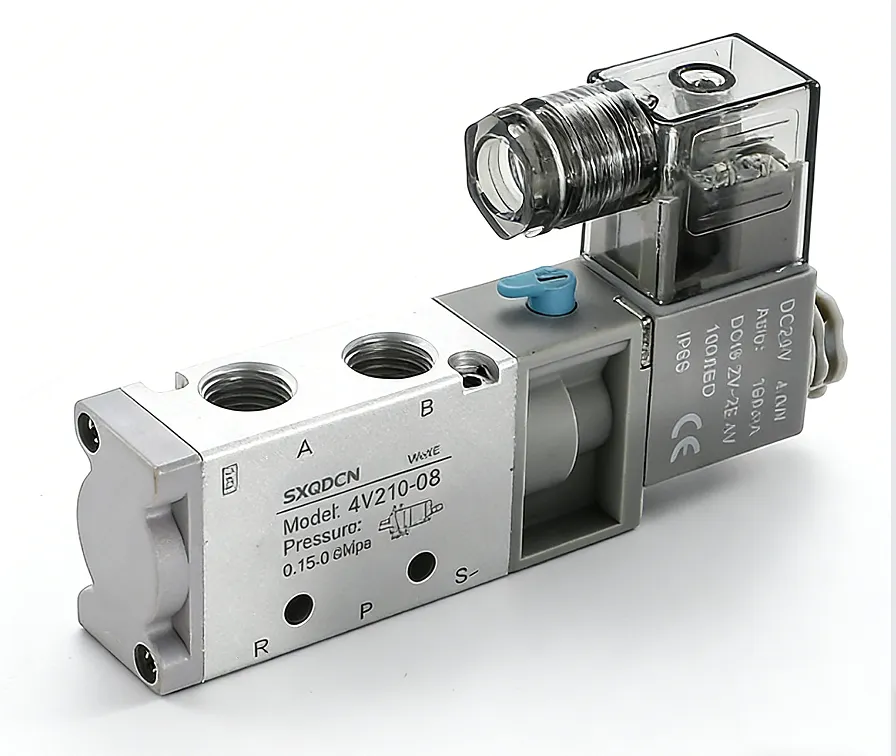
4.Power-On Testing
Before initial power-up, check that all electrical connections are correct and secure.
Listen for the valve's action sound upon energizing; a distinct "click" indicates proper response.
Verify that downstream cylinders or actuators move in the intended direction after the valve switches.